
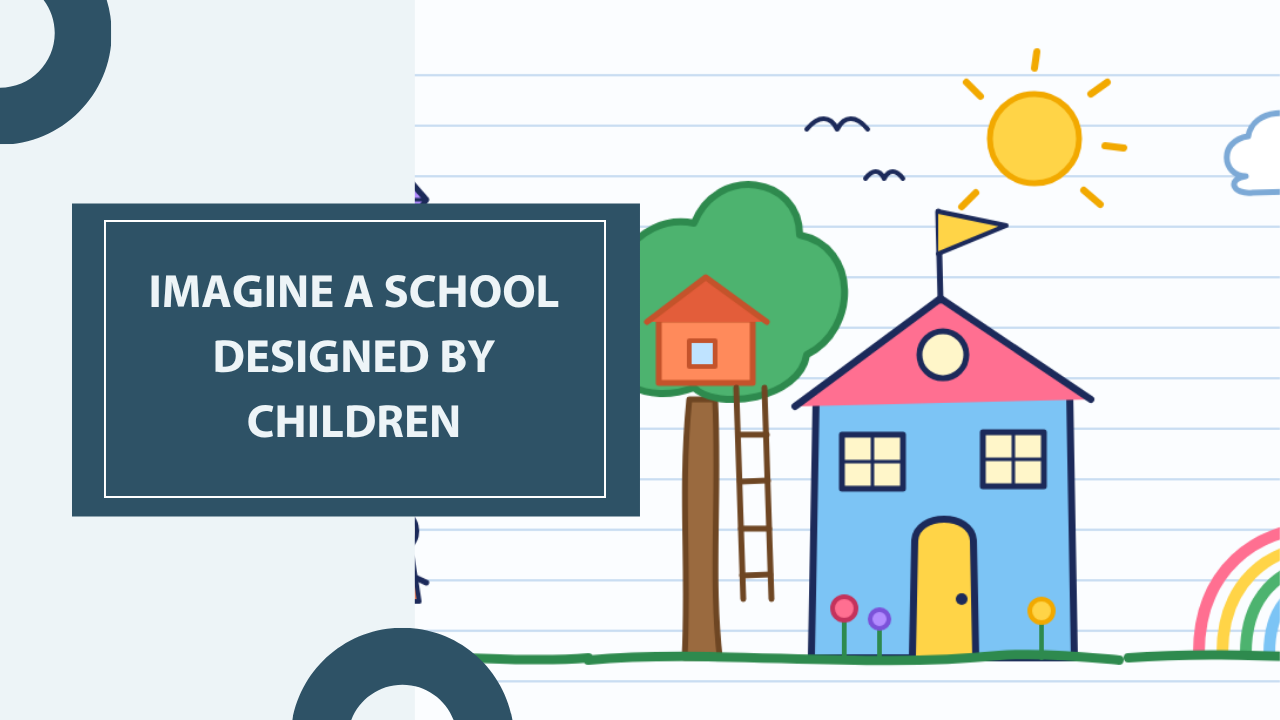
Ask a group of eight-year-olds to design their dream school, and not one of them will ask for more worksheets.
You’ll hear about treehouse classrooms. A room just for asking questions. Longer lunch breaks. A library with bean bags “so you can actually read.” And almost always, a teacher who “doesn’t get angry when you get it wrong.”
It’s easy to smile and move on. But listen a little longer, and you’ll notice something. Children aren’t asking for less learning. They’re asking for learning that makes sense to them.
At The Shri Ram Universal School, Hyderabad, we think that’s worth taking seriously. So let’s imagine it: what would a school look like if children were the architects?
- Learning Wouldn’t Stay Inside Four Walls
Children rarely picture a school as rows of desks facing a board. They picture gardens, open courtyards, science done with real soil and real bugs.
That instinct is sound. Children understand ideas best when they can touch, build and test them. This is the heart of experiential learning: measuring the shadow of a tree to understand angles, or running a class market to understand money. The lesson sticks because the child lived it.
- “Why?” Would Be the Most Welcome Word
Every parent knows the endless stream of “why” questions. In a school designed by children, those questions wouldn’t be a distraction from the lesson. They would be the lesson.
Inquiry-based learning works exactly this way. Instead of starting with answers, teachers start with a question worth exploring, and students work toward understanding. Curiosity isn’t something to manage; it’s the engine that drives everything else.
- Mistakes Would Be Part of the Plan
Children know how it feels to be afraid of the red pen. Given the chance, they’d build a school where trying something new is safer than staying quiet.
Research on how children learn supports this. When students feel safe to get things wrong, they take on harder problems, think more creatively and bounce back faster. A good school treats a mistake as information, not a verdict.
- Everyone Would Get to Shine at Something
A child who struggles with long division might be the best storyteller in the class. Another might light up on the football field, at the keyboard, or in the art room.
Children instinctively design schools where every kind of talent has space. That’s what holistic education means in practice: giving equal respect to the arts, sport, music, technology and academics, so every child discovers what they’re good at and grows in what they find hard.
- Teachers Would Be Guides, Not Just Examiners
When children describe their favourite teacher, they almost never mention how strict they were. They talk about someone who listened, who noticed when they were upset, who made a boring topic feel exciting.
In a student-centred learning environment, teachers are mentors. They know each child as a person, not a roll number, and they adjust how they teach to how that child learns.
- There Would Be Time to Play, Rest and Make Friends
“More recess” is on almost every child’s wish list, and it’s not just about fun. Play is how children practise negotiation, teamwork, problem-solving and empathy. Friendships built in the playground teach lessons no textbook can.
A school designed by children would protect that time, because children already understand what adults sometimes forget: wellbeing and learning go hand in hand.
What Grown-Ups Can Learn from Young Designers
Of course, not every idea would make it past the planning stage. (The chocolate fountain in the cafeteria might need some discussion.) But look underneath the wish lists and a clear picture appears. Children want a school that is:
Curious, where questions matter as much as answers
Safe, where they can try, fail and try again
Active, where learning happens by doing
Kind, where teachers and friends genuinely care
Balanced, where every talent counts
None of that is fantasy. It’s simply good education.
Bringing a Child’s Vision to Life at TSUS Hyderabad
At The Shri Ram Universal School, Hyderabad, we begin with a simple belief: children learn best when school is built around them, not the other way around. That idea shapes how our classrooms work, how our teachers engage with students and how we balance academic rigour with creativity, sport and emotional wellbeing.
We don’t just ask what children should learn. We ask how they learn, what excites them and who they are becoming.
If you’re exploring child-centric schools in Hyderabad and want a place where your child’s curiosity is celebrated, we’d love to show you around.